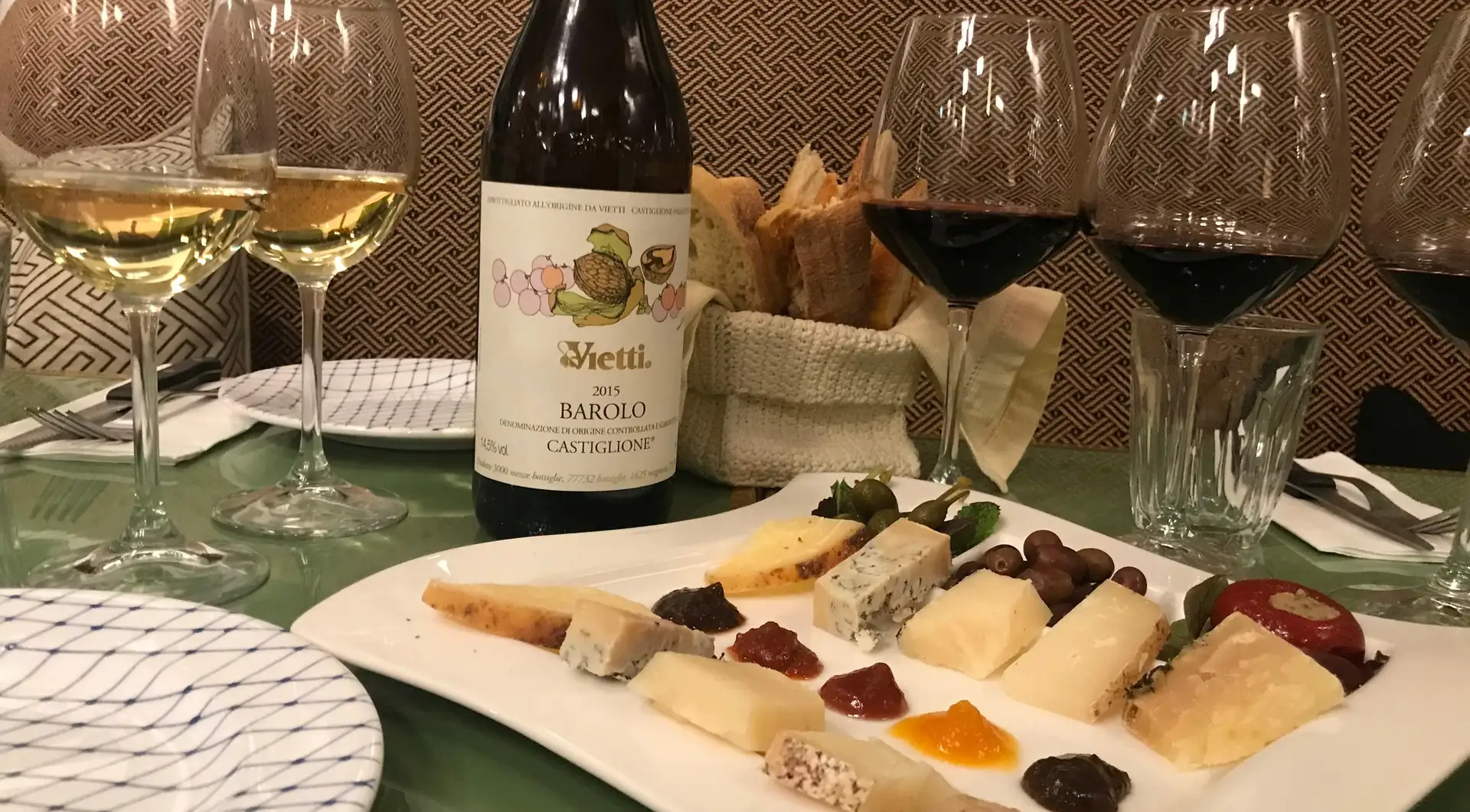
- 3–6 Wines at a typical tasting
- 18 Italy’s drinking age
- 1966 Frascati becomes DOC
- 3 DOCGs Lazio’s top category
- 18:00–21:00 Rome’s aperitivo hour
Rome Wine Tasting for Beginners: One Table, One Host, Each Wine Explained Before You Sip
The pairing tasting we suggest first, the VinoRoma class in Prati and the speakeasy in Monti — and when Enoteca Ferrara does the job instead.
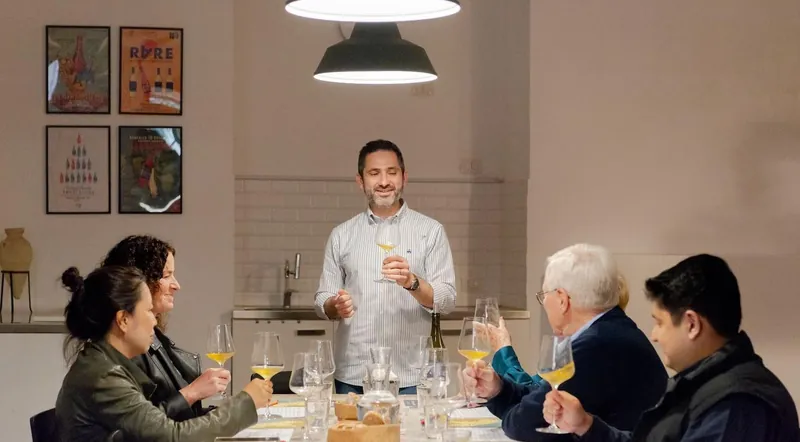
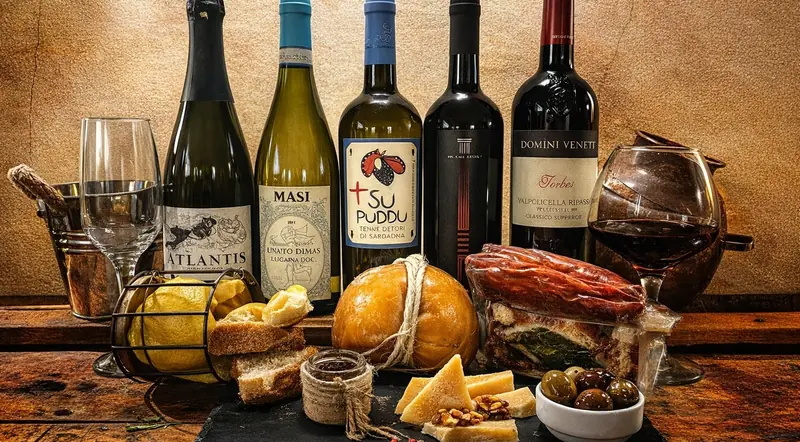
If you have never been to a wine tasting, Rome is a forgiving place to start, because the best tastings here are seated, small and explained glass by glass. Nobody tests you. A host pours each wine, says where it comes from and what to notice, and you taste it with a bite of cheese, cured meat or bread. The one we suggest first is Cooking Italy’s fine wine tasting and food pairing in central Rome: a foodie guide talks you through Italian wines beside truffles, Parmigiano and 30-year aged balsamic, top-ups are offered, and a dinner option makes it your evening meal. It is a pairing for people who come to wine through food; if you want a proper lesson in describing what is in the glass, the six-wine VinoRoma class in Prati suits you better. And if you only want one good glass, a wine bar such as Enoteca Ferrara in Trastevere is enough.
Highlights
- Italian wines introduced by a foodie guide, with top-ups offered as you go
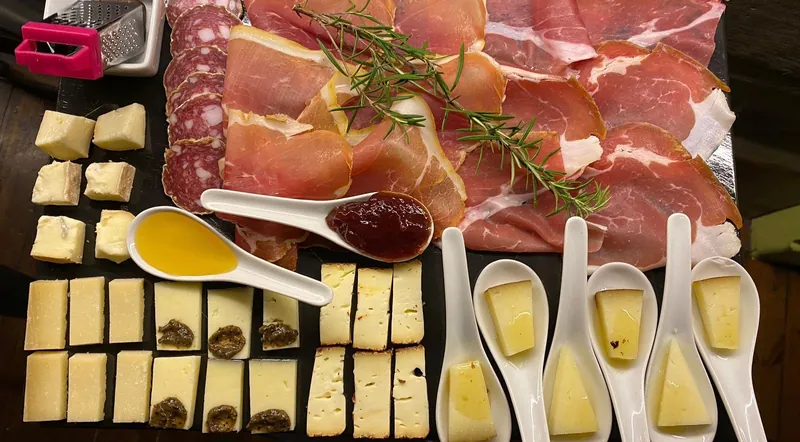
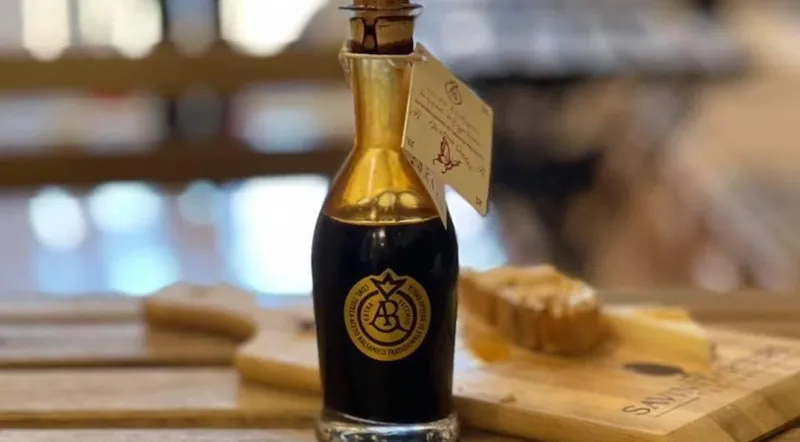
- Parmigiano Reggiano aged 36 months under 30-year traditional balsamic from Reggio Emilia
- Prosciutto di Parma aged 24 months, cream of Parmigiano with truffle, bruschette with green and red pesto
- A dinner option if you want the tasting to become your evening meal
- Two to four hours depending on the option, from one of three meeting points set by the option you book
What's Included
- Different Italian wines — the listing’s sample menu names two local wines
- Top-ups offered during the tasting
- Food pairings: local cheeses, cured meats, truffles and 30-year aged balsamic
- Expert tips from your guide on why each pairing works
- Dinner on the dinner option — check the meeting point for the option you choose
Check Availability & Prices
Pick your date and option below. Instant confirmation, and free cancellation up to 24 hours before.
Your First Rome Wine Tasting, Step by Step: Arrive, Listen, Look, Smell, Sip, Pair
Using Cooking Italy’s pairing as the example — from the meeting point to the last top-up, with the tasting technique the VinoRoma and Fabullus hosts teach too.
-
Check your meeting point and arrive hungry
This tasting has three meeting points, and yours depends on the option you book, so read the confirmation rather than guessing. Arrive five minutes early. Skip a big lunch: the board runs from Parmigiano to prosciutto and bruschette, and on the dinner option it becomes your evening meal.
-
Tell the host what you usually drink
Before the first pour the guide introduces the evening and the wines. This is the moment to say whether you normally drink white or red, dry or sweet, or nothing much at all. It is not a test; it lets the host explain each wine against something you already know.
-
Look, swirl, smell, then take a small sip
Hold the glass by the stem and tilt it against the table to see the colour. Swirl it gently to release the aroma, then smell before you drink. Take a small sip and hold it for a second or two: notice whether it feels sweet or dry, sharp or soft, and whether a red such as Cesanese or Chianti leaves your mouth slightly dry. That drying grip is tannin.
-
Taste the wine with the food, then without
Pairing is the point of this format. Try the wine, then a piece of 36-month Parmigiano with 30-year balsamic, then the wine again: salt and fat change how it tastes, often softening a red. Prosciutto di Parma aged 24 months and the truffle cream do the same with whites. Your guide will say why each match was chosen.
-
Take a top-up, slow down, or leave a glass
Top-ups are offered across the two to four hours, but you never have to finish a glass, and pouring wine away is accepted. Drink water between wines. If you love one wine, ask its name and producer before you leave — that is the most useful thing a beginner can take home, and it makes ordering in a Roman wine bar easier.
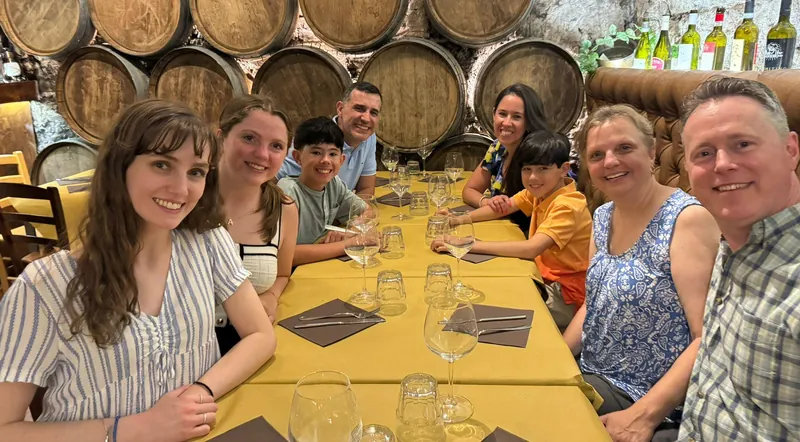
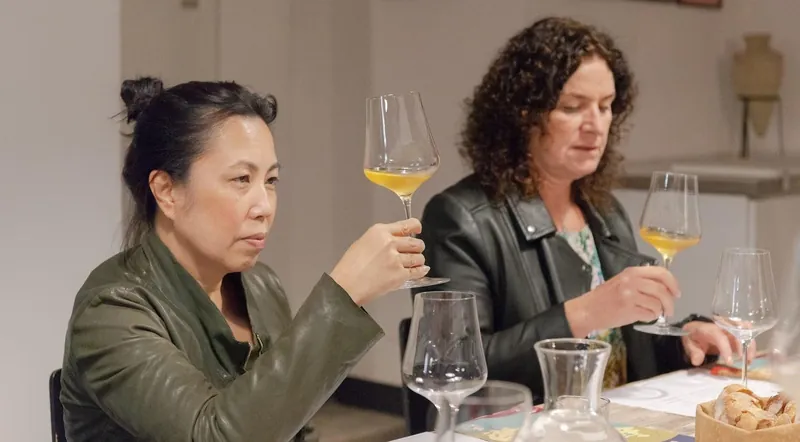
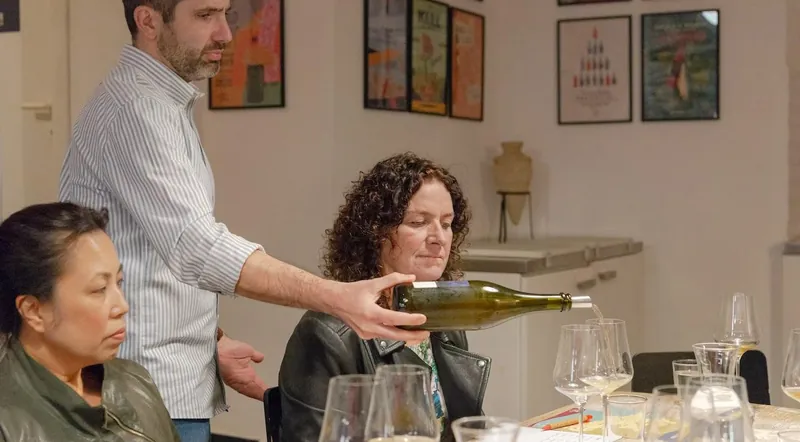
What a Beginner’s Wine Tasting in Rome Looks Like
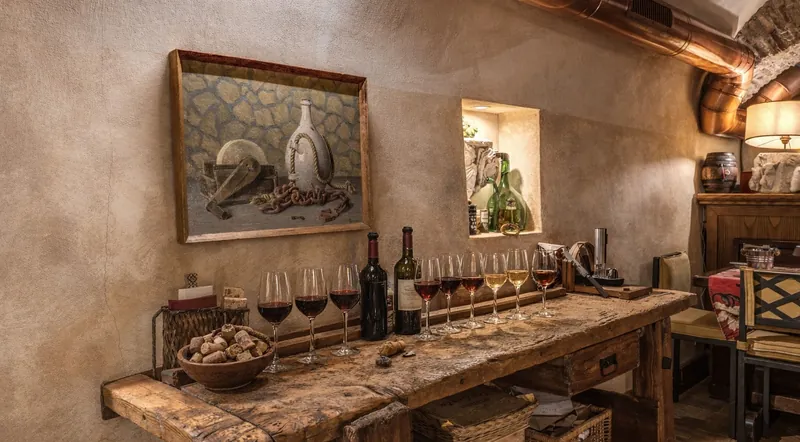
A barrel room, a sommelier’s table in Prati, a cellar in Trastevere and a speakeasy in Monti. Scroll or drag to browse.
Choosing Your First Rome Wine Tasting: Seated, Small, Three to Six Wines, Food on the Table
VinoRoma in Prati, Cabaret Voltaire in Monti, the Fabullus cellar in Trastevere — what to look for on the listing.
Learn at a table, not between stops
A seated tasting gives each wine its own introduction. A food tour such as the four-hour Jewish Quarter walk pours wine, beer or soft drinks alongside up to 15 food samples at seven eateries — a fine evening, but you will learn about food, not wine. For a first tasting, book the table.
Six guests means you can ask anything
VinoRoma in Prati and the speakeasy tasting in Monti both cap groups at six, and the Testaccio cave tastings at ten. Beginners ask more questions, and a small table makes that easy. Most other listings state no cap, so do not assume one.
Three is a taste; six is a lesson
Three wines, as at the Monti speakeasy in 1.5 hours, is enough to compare a white and a red. The Fabullus guided flight lets you choose four, five or six in 30–60 minutes. Six, as at VinoRoma, is where regions and grapes start to make sense — and where pacing matters.
Never taste on an empty stomach
Pairing formats such as Cooking Italy’s tasting or the Fabullus food and wine board put cheese and cured meat between every glass. Pure wine flights serve only bread or taralli crackers, so eat beforehand. Either way, ask for water and use it.
Rome Wine Tastings for Beginners Compared: Format, Wines, Who Explains, Group Size, Length
Central Rome, Prati, Monti and Trastevere — which ones are built to teach, and which pour wine as part of a meal.
| Tasting | Format | Wines | Who explains | Group | Length | From |
|---|---|---|---|---|---|---|
| Fine wine tasting & food pairing Cooking Italy, central Rome |
Seated pairing, dinner option | Italian wines, top-ups offered | Foodie guide | No cap stated | 2–4 h | $55 |
| Guided Italian wine tasting VinoRoma, Prati |
Sommelier class | 6 from across Italy | Sommelier | Max 6 | 2 h | $89 |
| Speakeasy wine and food tasting Cabaret Voltaire, Monti |
Seated tasting | 3 wines + 3 bites | Host | Max 6 | 1.5 h | $33 |
| Guided wine tasting Fabullus cellar, Trastevere |
Seated cellar flight | 4, 5 or 6 incl. prosecco | Host or sommelier | No cap stated | 30–60 min | $42 |
| Food tasting with wine pairing Fabullus cellar, Trastevere |
Seated cellar tasting | Prosecco + 2–4 wines | Host | No cap stated | ~75 min | $65 |
| Jewish Quarter food and wine walk Food Raphael Tours |
Walking food tour | Wine, beer or soft drinks | Foodie guide | No cap stated | 4 h | $99 |
Short version: start with Cooking Italy’s pairing if you like food more than wine jargon; book VinoRoma if you want to learn to describe what you taste; take the Monti speakeasy or the Fabullus flight for a short, cheap first go. The food walk is there for contrast — enjoyable, but not a wine lesson. Prices are the per-person “from” figures GetYourGuide showed on 15 October 2026 and change with the option and date.
What Guests Say About the Fine Wine Tasting & Food Pairing
Four verbatim reviews of Cooking Italy’s tasting, including the top-ups and the explanations.
“This tour was great! Lots of unique tastings and the tour guide was amazing. She even topped off my glass when I got low. 10/10.”Briana · United States · March 2026
“We absolutely loved this experience! The gentleman was so informative and passionate about the food and the wines. Such a great selection of wine and food.”Lily · United Kingdom · November 2025
“Leila was absolutely amazing - Super friendly and very knowledgable / We also were paired with some lovely people to share the experience with x”Amy · United Kingdom · December 2025
“This tour completely exceeded our expectations! Tone, originally from Norway, was a fantastic guide during our wine tasting and food pairing. We got very lucky in that we were the only ones on the tour! Tone was very informative and delivered this information in an enthusiastic and captivating way. The wines we tasted were delicious and the food we had was a great insight into Italian cuisine. The gelato was one of our favourite bits as Tone educated us on how to spot a good gelato and the gelato we had was out of this world delicious! Tone is excellent at her job and we wish her all the best during her time in Italy”Emily · United Kingdom · August 2026
Reviews are quoted verbatim from GetYourGuide, with emojis removed. The rating reflects 78 verified reviews as of October 2026. We earn a commission if you book through the links on this page, which does not change your price.
Other Beginner-Friendly Tastings: a Proper Class, a Short Speakeasy, a Cellar Flight, a Cheap Pairing
Three seated wine tastings and one food-led pairing — pick by how much you want to learn and how long you want to sit. For the full ranking, see the best wine tastings in Rome.
Sommelier class · Prati
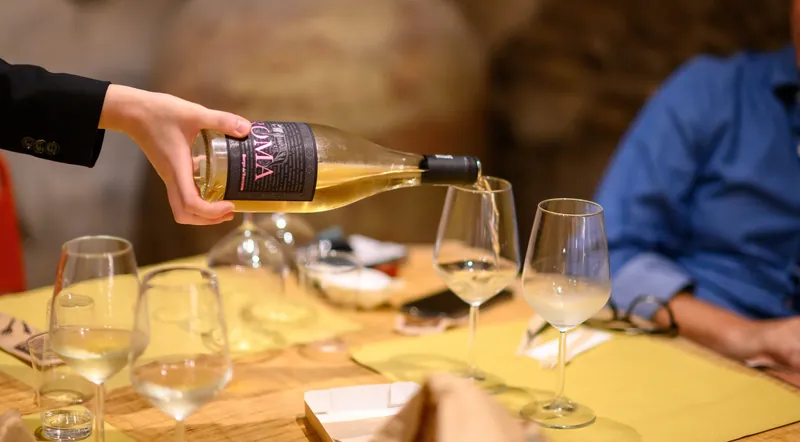
Six wines and a sommelier who teaches you to describe them
A seated two-hour class in a private tasting room at Gabrini restaurant near the Vatican: six Italian wines from small producers, a map of regions and grapes to take home, and a listing that promises to teach you how to describe what you like and don’t. Taralli only, and six guests at most.
Choose this if you want to leave able to order Italian wine with confidence, and do not mind paying for it.
★ 4.7 · 16 reviews · From $89 · VinoRoma Wine Studio Check dates & prices
Seated tasting · Monti
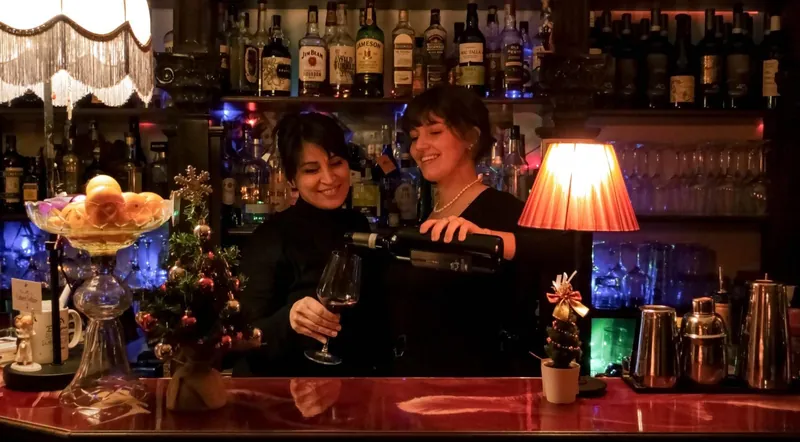
Three wines and three bites in a Monti speakeasy
Cabaret Voltaire on Via Panisperna, a few streets north of the Colosseum: a host pours three wines from small Italian wineries with a food sample for each, in 1.5 hours. Capped at six and adults only. One reviewer says it got a friend who rarely drinks wine to start experimenting.
Choose this if you want a short, low-cost first tasting that does not take over the evening.
★ 4.6 · 17 reviews · From $33 · Cabaret Voltaire Roma Check dates & prices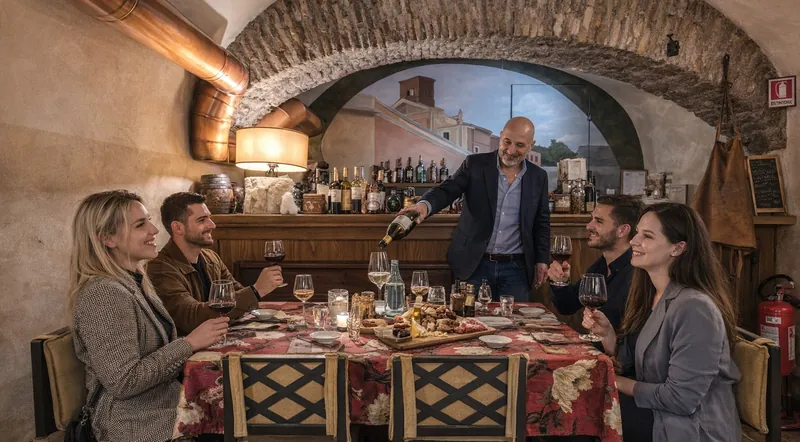 Seated cellar flight · Trastevere
Four to six wines in a 1st-century Roman cistern
The wine-only flight at Cantina Fabullus: four, five or six Italian wines including prosecco, each introduced for aroma, structure and region, with bread and taralli. It lasts 30–60 minutes, and one reviewer mentions the host getting them to guess the flavours. Not for under-16s.
Choose this if you want a quick, structured flight in a historic room before dinner in Trastevere.
★ 4.6 · 34 reviews · From $42 · Tour in the City - Travel Agency Rome Check dates & prices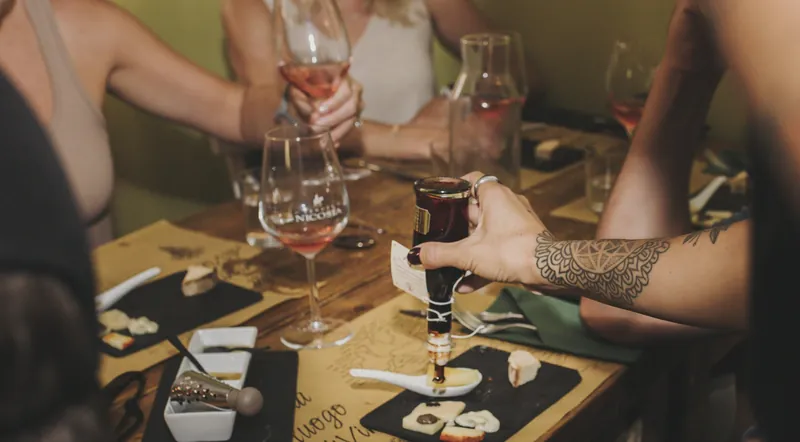 Food-led pairing · Trastevere
Two wines, ten Italian products and a gelato
Cooking Italy’s cheaper sibling to our top pick: two wines in a Trastevere wine bar beside ten tastings including pesto Genovese, Asiago, buffalo mozzarella and 30-year balsamic, then gelato. It is a pairing that leans on food, not a wine lesson — only two wines are poured.
Choose this if you are curious about wine but mainly want a relaxed, well-reviewed food stop.
★ 4.9 · 300+ reviews · From $36 · Cooking Italy Check dates & pricesKnow Before You Go: Tasting Etiquette, Wine Words, Whether It Is Worth It, and Who Can Join
Pace, spitting, DOC and DOCG, tannin, Frascati, Enoteca Ferrara and the age rules — checked 15 October 2026.
Etiquette: the five things a host notices
Arrive on time, because the first wine is usually introduced to the whole table at once. Pace yourself: on a six-wine flight, small sips and water between glasses keep the last wine as interesting as the first. Eat between wines rather than after them. You do not have to finish a glass, and if there is a spittoon you can use it — nobody minds either way. Above all, say what you like: “I usually drink sweet white” is a perfectly good answer, and it lets the host explain a dry Frascati or a Cesanese in terms you recognise. If you want a quieter table, our private wine tastings page covers the options for just your group.
The words you will hear
DOC (Denominazione di Origine Controllata) marks a wine from a defined area made to set rules on grapes and method; Frascati, the white from the hills about 20 km south-east of Rome, became one in 1966. DOCG adds Garantita and stricter rules, including an official tasting check; Lazio has three — Cesanese del Piglio, Frascati Superiore and Cannellino di Frascati. Dry means little or no sugar left in the wine (Frascati Superiore is dry), sweet means some remains (Cannellino is the sweet one); fruity is not the same as sweet. Tannin comes from grape skins, seeds and oak, and is the drying grip a red such as Barolo or Cesanese leaves on your gums. Body is how heavy the wine feels — skimmed milk against cream. Our guide to the best Italian wines to try in Rome puts names to these styles.
Is a tasting worth it, or should you just order by the glass?
It depends on what you want from the evening. A glass in a good Roman wine bar such as Enoteca Ferrara in Trastevere is roughly €5–12 at the time of writing, so three glasses on your own cost less than the cheapest tasting here ($33 at the Monti speakeasy). What the booking buys is the explanation, food chosen for each wine, and someone to ask — worth it once, early in the trip, if you want to order better afterwards. If you already know what you like, skip the tasting and go to the bar, or book ahead at Roscioli near Campo de’ Fiori. The full breakdown is in our Rome wine tasting prices guide, and our ranking of the best wine tastings in Rome sets the formats side by side.
Which format to book first, and which to save
For learning, a seated tasting with three to six wines beats everything else: Cooking Italy’s pairing if you like food, VinoRoma if you want a lesson (six wines, six guests), the Monti speakeasy for 1.5 hours and three wines, or the Fabullus wine flight for 30–60 minutes. Save the food walks for another night if wine is the point — they pour alongside 10 or more food tastings and are covered in our evening wine tours guide. If one neighbourhood suits your hotel, the Trastevere wine tasting page compares every format there; if the room matters as much as the wine, see the underground cellar tastings; and if cheese is what draws you in, the wine and cheese tastings start there. Travelling between November and February? The winter guide picks the warmest rooms.
Age limits, non-drinkers and diets
Italy’s legal drinking age is 18. The Testaccio cave tasting serves minors a non-alcoholic soft drink instead of wine; the Fabullus food and wine tasting does not take children under 7, and the Fabullus wine flight is for 16 and over; the Monti speakeasy and the Pigneto candlelit cave are 18 and over. Non-drinkers usually do better on a food tour that offers alcohol-free drinks, such as the Trastevere walk by Carpe Diem Tours. If you have allergies or follow a special diet, say so when you book: the Fabullus flight lists people with food allergies as unsuitable, and the listing for our top pick does not set out dietary alternatives.
One habit worth keeping: photograph the label of any wine you liked. Rome’s wine bars and enoteche will usually find you the same producer, or a close match, if you show them the bottle.
The Vatican Museums and St Peter’s in the morning, the Colosseum and the Roman Forum, an evening in Trastevere, or a half-day trip to Frascati in the Castelli Romani — easy things to pair with a first wine tasting in Rome.
Rome Wine Tasting for Beginners: Frequently Asked Questions
What happens, what to know, spitting, DOC and DOCG, worth it, which to book, who can join and whether to eat first.
What happens at a wine tasting in Rome?
You sit at a table while a host or sommelier pours one wine at a time, usually three to six in all. Before each pour they tell you where the wine comes from, which grape it is made from and what to notice. You look at it, swirl, smell and sip, then try it with the cheese, cured meat or bread on the table. Most seated tastings in Rome last one to two hours; pairing formats with dinner run longer.
Do I need to know anything about wine before a tasting?
No. The hosts on Rome’s seated tastings expect mixed groups, and the VinoRoma class in Prati is built around teaching you how to describe what you like and don’t like. The most useful thing you can bring is a clear answer to one question: do you usually prefer white or red, and dry or sweet? Say it at the start and the host can steer you.
Do I have to spit, or finish every glass?
Neither. Spitting is normal at professional tastings and nobody will mind if you do it, but on a relaxed tasting in Rome most guests swallow. You never have to finish a glass: leaving wine in it, or pouring it away, is accepted. Drink water between wines and eat as you go, especially if the flight runs to five or six.
What do DOC and DOCG mean on an Italian wine label?
They are Italy’s two highest quality categories. DOC (Denominazione di Origine Controllata) means the wine comes from a defined area and follows rules on grapes and production; Frascati became one in 1966. DOCG adds “Garantita” and stricter rules, including an official tasting check. Lazio, the region around Rome, has three DOCGs: Cesanese del Piglio, Frascati Superiore and Cannellino di Frascati.
Is wine tasting in Rome worth it, or is a wine bar better?
A tasting is worth it if you want to learn something: you get three to six wines explained, a matched food board and a host to ask. If you only want a good glass, a wine bar is cheaper — a glass at Enoteca Ferrara in Trastevere is roughly €5–12 at the time of writing, against about $33–89 for a seated tasting. Many first-timers do both: a tasting early in the trip, wine bars afterwards.
Which wine tasting in Rome is best for beginners?
For a relaxed start with plenty of food, Cooking Italy’s fine wine tasting and food pairing. To actually learn how to taste, the six-wine VinoRoma class in Prati, capped at six guests. For a short, inexpensive introduction, the three-wine speakeasy tasting in Monti, also capped at six, or the 30–60 minute guided flight in the Fabullus cellar in Trastevere.
Can under-18s or non-drinkers join a wine tasting in Rome?
Italy’s legal drinking age is 18, and rules vary by venue. The Testaccio cave tasting serves minors a non-alcoholic soft drink instead of wine; the Fabullus food and wine tasting does not take children under 7, and its guided wine flight is for 16 and over; the Monti speakeasy is adults only. Non-drinkers are usually happier on a food tour, several of which offer alcohol-free drinks.
Should I eat before a wine tasting?
Have a light meal earlier in the day, but do not arrive full on pairing formats: Cooking Italy’s tasting serves cheeses, prosciutto, bruschette and truffle cream, and its dinner option replaces your evening meal. Tastings with only bread or taralli crackers, such as the Fabullus wine flight or the VinoRoma class, are different — eat properly beforehand.
More Guides to Tasting Wine in Rome
Longer answers to the questions this page could only summarise.
- Rome wine tasting toursCellars, sommeliers and wine with Roman food, compared.
- Best wine tastings in RomeSeven experiences worth booking, ranked, with what each pours and serves.
- Trastevere wine tastingCellars, wine bars and food walks in Rome’s most popular wine neighbourhood.
- Underground wine tastingsA Roman cistern, the caves under Monte Testaccio and a candlelit tufa cellar compared.
- Wine and cheese tastingsPecorino, buffalo mozzarella and cave-aged cheeses with the wines that suit them.
- Private wine tastingsWhat a private tasting costs, and when a small group is the better buy.
- Evening food and wine toursNight walks through Trastevere and the Jewish Quarter that replace dinner.
- Rome wine tasting pricesBudget, mid-range and premium tastings, and what a wine bar costs instead.
- Italian wines to try in RomeFrascati, Cesanese and the northern classics, and which tastings pour them.
- Wine tasting in winterWarm cellars and candlelit caves for November to February.